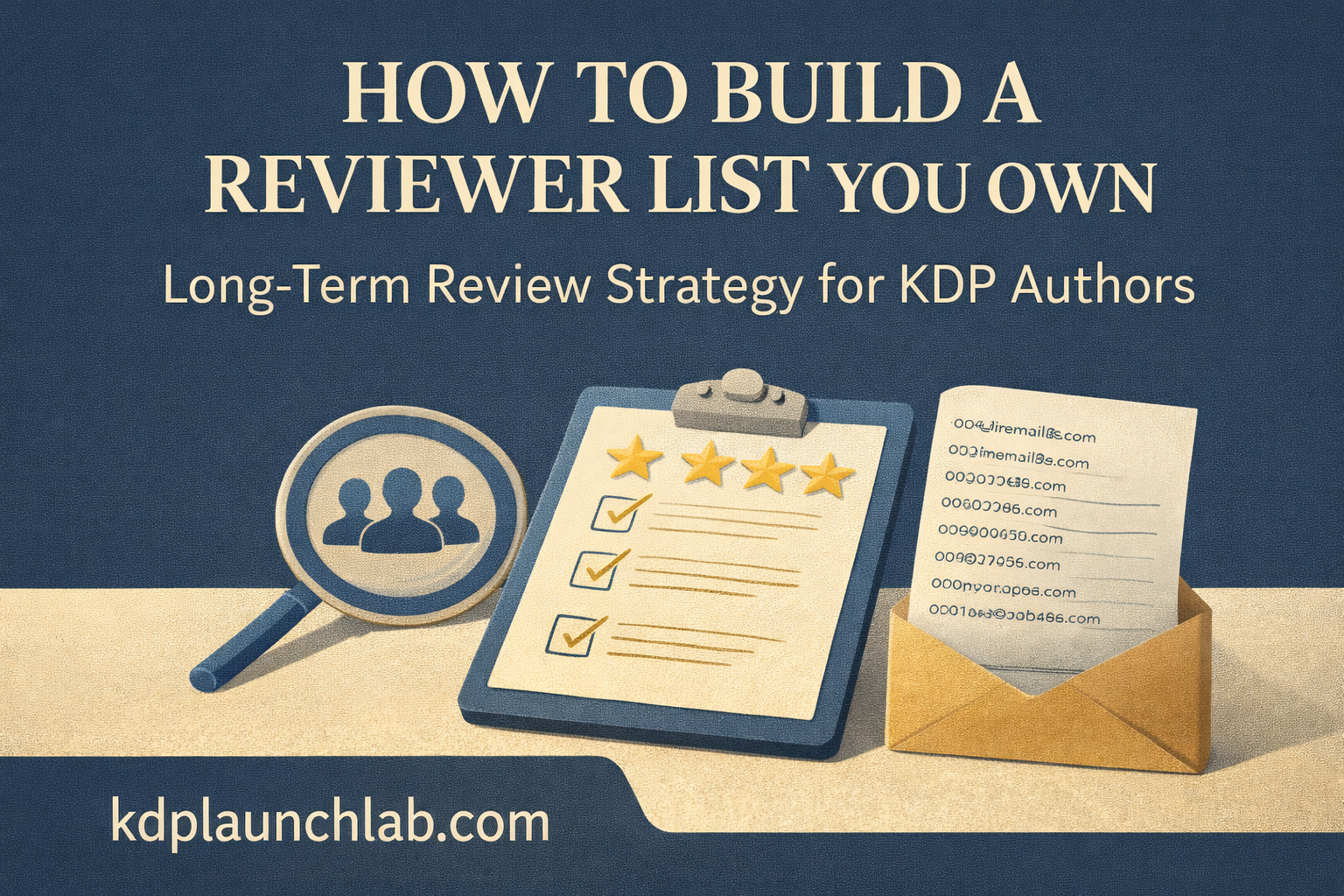
How to Build a Reviewer List You Own For Amazon KDP
KDP ReviewsDecember 18, 2025•8 min read
The Smart, Safe, and Sustainable Review Strategy for KDP Publishers
If you publish on Amazon, you already know how much reviews matter. They influence visibility, conversion, and reader trust.
But you’ve probably also seen the flip side — reviews disappearing, enforcement waves, or books getting blocked when systems detect unusual activity.
That’s why smart publishers are building reviewer lists they own. A personal reviewer list gives you control, safety, and long-term stability, while still letting you use review services responsibly when needed.
Let’s go step-by-step through how to build your list, what tools are safe to use, and how to turn readers into a loyal review base.
1. Why Owning Your Reviewer List Is Essential
Reviews drive the KDP ecosystem. They impact:
-
Search ranking
-
Click-through rate
-
Conversion rate
-
Algorithmic visibility
But not all reviews are equal.
Amazon’s systems evaluate review patterns, not just content. That means reviews coming from shared pools or overlapping groups can look suspicious even if you’ve done nothing wrong.
When you control your own reviewer base, you eliminate those shared-pool risks. You know who your readers are, how they found you, and how they interact with your books.
You can still use platforms like Drive or other review tools — they’re fine when used carefully — but your long-term stability should never depend entirely on them.
2. Using Review Systems Safely (Including Drive)
Let’s be honest — most authors start with review platforms. You need traction early, and systems like Drive, Book Bounty, or similar platforms can help. I personally use them.
The key is moderation.
Here’s how to keep your account safe while using review systems:
Do:
-
Use only one or two platforms at a time.
-
Space out your activity — avoid bursts of 20+ reviews in a week.
-
Keep clear separation between platforms to prevent overlapping reviewers.
-
Track who reviews your books to avoid accidental triangles.
Don’t:
-
Join multiple review “buckets” or rotation groups.
-
Review books from authors who reviewed you (this creates review triangles).
-
Post multiple reviews in a short timeframe from the same network.
Even when platforms are safe, the issue is overlap. Using too many can unintentionally create review triangles or circular exchanges.
Use them, but build your own list at the same time. That list becomes your insurance policy.
3. Most Authors Don’t Have an Audience — So Build One
Many KDP authors, especially newer ones, don’t have a built-in audience. That’s fine. You just need to start growing one intentionally.
Your goal is not millions of followers. Your goal is a small, consistent group of readers who trust you and want to engage with your work.
Where to Find Readers:
1. Niche Facebook Groups
Find communities that align with your genre or topic.
Examples:
-
Historical fiction readers
-
Classic literature fans
-
Parents who love children’s picture books
-
Self-improvement and philosophy readers
Join as a contributor, not a spammer.
Comment, share ideas, offer insight.
Then quietly mention your books or invite people to join your ARC list.
2. Reddit Threads
Reddit has highly targeted audiences. Look for subreddits like:
-
r/selfpublish
-
r/booksuggestions
-
r/KindleUnlimited
-
r/classiclit
-
r/fantasy
-
r/nonfiction
Be part of discussions. Add value. Over time, mention your author site or invite readers to your ARC list naturally.
3. Goodreads Groups and Discord Servers
Some small reader communities exist privately on Discord or Goodreads. If you find them, engage.
Focus on one or two groups at a time and show up consistently.
4. Your Own Books
The readers already finishing your books are the best reviewers you’ll ever have. Add a link at the end of each book:
“Want early access to new releases? Join my ARC list for free books and behind-the-scenes updates.”
It’s simple but effective. Readers who finish your books are far more likely to review future ones.
4. Building the ARC List Foundation
You don’t need fancy tools to start.
Start with:
-
A Google Form or Drive folder
-
An email service (ConvertKit, Beehiiv, MailerLite, or even Gmail)
-
A spreadsheet to track contacts and responses
Keep the process transparent and friendly:
-
Tell readers they’re joining your “early reader” list.
-
Give them early access to new books.
-
Ask for honest feedback or an optional review.
The magic words are “optional” and “honest.”
You want reviewers who feel free, not obligated.
5. Set the Right Expectations
Every reviewer list has different engagement levels.
Even when you personally follow up, only about 40–60% of your list will actually leave reviews.
That’s normal.
Some will read but never review.
Some will mean to but forget.
Some will stop responding.
Don’t take it personally — it’s part of the math.
If you want 20 reviews, you’ll likely need 40–50 people on your list.
Keep growing it slowly, understanding that consistency beats perfection.
6. How to Grow the List
You can grow your reviewer base even without ads or a big platform.
Here are the best organic methods:
1. Leverage Your Existing Readers
Use your “About the Author” section, front matter, and back matter to invite readers directly to your list.
2. Offer Something of Value
Readers love early access, behind-the-scenes stories, and sneak peeks.
Position it as an invitation, not a favor.
Example:
“Get early access to my next release — no strings attached.”
3. Engage Regularly in Reader Spaces
Every comment, recommendation, and answer builds recognition.
The more you’re seen helping people, the more curious they’ll become about your work.
4. Collaborate With Similar Authors
Swap audience mentions, not reviews.
Feature each other’s work in newsletters.
Cross-pollinate without crossing review lines.
7. Guiding Reviewers Without Pressure
Once you have people on your list, communication is everything.
When you send out ARC links:
-
Be specific about what kind of feedback helps.
-
Explain Amazon’s rules briefly.
-
Emphasize honesty and timing flexibility.
Here’s a sample message:
“Hi [Name],
Thanks for joining my ARC team. Your feedback means a lot.
You’re welcome to leave an honest review once the book goes live — no pressure or deadline.
It helps if you:
• Use one Amazon account
• Review in your own words
• Avoid posting multiple reviews at onceI appreciate your time and support. You’re part of what makes this work possible.”
That tone builds trust and keeps everything within policy.
8. Track, Don’t Chase
You can use a simple spreadsheet to track:
-
Who received your ARC
-
Whether they opened it
-
Whether they reviewed
But tracking is for you — not them.
Never pressure readers.
Never follow up asking “Did you leave your review yet?”
If you over-manage, you’ll lose trust quickly.
Instead, thank everyone who engages, and send general reminders to the whole list once or twice per book.
9. Balance Between Owned List and Platforms
Here’s the balanced formula most experienced publishers follow:
Custom HTML/CSS/JAVASCRIPT
Source
Role
Risk
Notes
Your ARC List
Core reviewer base
Very Low
The safest, long-term strategy
Drive
Review coordination tool
Low
Safe when used moderately
Other Review Platforms
Short-term visibility
Moderate
Avoid overlap or review triangles
Social Media / Reader Groups
Growth pipeline
Low
Best place to find future ARC readers
The key is balance.
Use systems when they’re working well, but don’t depend on them entirely.
Your list is your foundation.
Everything else is supplemental.
10. How to Nurture the List Over Time
Keep your reviewers warm without burning them out.
Send updates between launches — once every month or two.
What to include:
-
Sneak peeks of your next book
-
Polls about cover designs or titles
-
Behind-the-scenes insights
-
Thank-you notes
These small touches make people feel connected to your author journey.
And when they feel connected, they keep reviewing.
11. Scaling Your System
Once your list reaches 100–200 people, it’s time to organize.
You can segment by:
-
Genre
-
Engagement level
-
Format preference (ebook, print, audio)
Send smaller, targeted batches instead of mass sends.
This keeps review velocity natural and organic — exactly what Amazon wants to see.
You’ll start seeing consistent results:
-
40–60% review rates per release
-
Organic cross-reviews from readers who loved previous titles
-
Predictable launch stability
12. The Future Benefits of Owning Your Reviewer List
When you own your list, you’re not dependent on external review systems.
You’re building a sustainable business asset.
Here’s what it gives you:
1. Launch Control
You can plan soft or hard launches with predictable early reviews.
2. Algorithmic Safety
Your reviews will look diverse and organic — no red flags.
3. Cross-Catalog Momentum
Readers follow you from one title to the next, raising all your books together.
4. Audience Expansion
As you interact in niche spaces, your reputation grows.
You’re not just another author — you’re a trusted curator in your category.
5. Business Flexibility
With an owned list, you can branch into:
-
Email marketing
-
Paid promotions
-
Direct sales
-
Kickstarter or Substack projects
You are no longer at the mercy of platform shifts.
13. How This Fits the New Era of Publishing
AI tools, public domain content, and fast publishing cycles are reshaping the market.
But some fundamentals never change.
Readers still want connection, credibility, and trust.
Your reviewer list is the bridge between automation and authenticity.
It’s the human element that keeps your publishing model sustainable.
Final Thoughts
Owning your reviewer list is not a luxury. It’s a survival skill.
You can still use review systems — I do, and they can work beautifully when handled with care. But they should never be your only strategy.
Grow your list.
Engage your readers.
Understand that only 40–60% will ever leave a review, and that’s perfectly fine.
Those consistent, honest reviewers will carry your catalog further than any short-term system ever could.
Michael Osborne
Michael Osborne is the creator of KDP Launch Lab, where he teaches simple, practical publishing systems for low content, public domain, and high content books.
Back to Blog


