
The Ultimate Guide to Building a High-Converting ARC Team for Your KDP Launch

Table of Contents
- Understanding the Role of an ARC Team in KDP Success
- How to Source High-Quality ARC Readers
- Filtering for Quality: How to Build a High-Converting Team
- Professional Onboarding: Setting Your Team Up for Success
- Managing Digital Distribution and File Security
- The Launch Phase: Turning ARC Readers into Reviewers
- Scaling and Maintaining Your ARC Team Long-Term
- Navigating Amazon’s Terms of Service and FTC Guidelines
Understanding the Role of an ARC Team in KDP Success
What is an ARC Team?
An ARC (Advance Review Copy) team is a curated group of readers who receive a complimentary, early manuscript of your book before its official publication date. In exchange, they agree to read the book and leave an honest review on Amazon—and ideally platforms like Goodreads or BookBub—during your launch window. Rather than casual readers, treat your ARC team as your book’s dedicated street team and foundational marketing engine.
The Difference Between ARCs and Paid Reviews
Amazon’s Terms of Service (TOS) are aggressively enforced to protect customer trust, making it vital to understand the difference between legitimate ARCs and prohibited practices:
- Paid Reviews: Exchanging money, gift cards, or any form of tangible compensation for a review. This is strictly prohibited by Amazon and is a fast track to having your reviews wiped or your KDP account terminated.
- ARC Reviews: Gifting a free digital copy of your book without demanding a 5-star rating. This fully complies with Amazon’s guidelines, provided the reader discloses they received a free copy to comply with FTC regulations. Legitimate ARCs rely on reciprocity and a genuine love for your genre, never financial bribery.
Why ARCs are the Lifeblood of a KDP Launch
Publishing a book on Amazon with zero reviews is like opening a restaurant with an empty parking lot—potential buyers will simply keep scrolling. A high-converting ARC team solves this critical “cold start” problem.
- Immediate Social Proof: Cold traffic hesitates to buy untested books. Securing 15 to 30 early reviews dramatically increases reader trust, lifting your overall sales page conversion rate.
- Algorithmic Traction: Amazon’s algorithm rewards books that convert. When early reviews drive higher conversion rates, Amazon responds by boosting your organic visibility and pushing your book through “Also Bought” recommendations.
- Ad Efficiency: Strong social proof directly improves the ROI of your Amazon Ads and paid newsletter promotions, ensuring you aren’t paying for clicks that don’t convert.
Ultimately, your ARC team is the catalyst that transforms a quiet manuscript upload into a profitable, highly visible KDP launch.
How to Source High-Quality ARC Readers
Finding people willing to read a free book is simple; sourcing reliable readers who will actually leave a thoughtful, compliant review on your KDP launch day requires strategic targeting. To build a high-converting Advanced Reader Copy (ARC) team, you must recruit from platforms where dedicated, genre-specific readers actively congregate.
Leveraging Your Existing Email List
Your current newsletter subscribers are your warmest audience. They are already invested in your author brand and familiar with your writing style. However, avoid blasting an ARC invitation to your entire list. Instead, segment your most engaged subscribers—those with the highest open and click-through rates over the last three to six months. Send this localized segment an exclusive, application-based invitation. Framing your ARC team as an elite VIP street team increases its perceived value, ensuring you attract dedicated fans rather than casual freebie-seekers.
Utilizing Social Media Groups and Communities
Genre-specific reader hubs on Facebook and Goodreads, alongside the highly viral communities of BookTok and Bookstagram, are absolute goldmines. When tapping into these spaces, authentic engagement must precede your ask. Seek out Facebook groups that explicitly allow “ARC calls” and post high-quality, on-brand promotional graphics. Clearly highlight your book’s core tropes, heat level, or specific sub-genre. This upfront transparency acts as an initial filter, ensuring you only attract readers who naturally devour your specific type of story.
Tapping into Specialized ARC Services
If you lack an established audience, specialized ARC distribution platforms can rapidly populate your team. Services like BookSprout, BookSirens, and NetGalley exist solely to connect authors with vetted, eager reviewers.
- BookSprout & BookSirens: Highly effective for indie authors needing affordable, genre-targeted reach. Both platforms feature built-in automated review reminders and reader tracking.
- NetGalley: A premium investment ideal for authors wanting to reach professional book bloggers, librarians, and high-tier Amazon reviewers.
While these platforms require a financial investment, the return on reliable, automated review generation is often well worth the cost for a competitive launch.
Networking with Fellow Authors in Your Genre
Author collaboration is arguably the most powerful, cost-effective strategy in self-publishing. Cultivate relationships with authors writing in your exact KDP niche and propose an ARC team swap. In this arrangement, you introduce their trusted readers to your upcoming release, and they do the same for you. Because these readers are already trained in the ARC process, vetted by a peer, and proven to leave reviews in your genre, they historically yield some of the highest conversion rates in the industry.
Filtering for Quality: How to Build a High-Converting Team
Attracting hundreds of potential ARC (Advance Reader Copy) readers is only half the battle. To guarantee a high conversion rate on launch day, you must ruthlessly filter your applicants. When it comes to a successful KDP launch, quality always trumps quantity.
Creating a Reader Application Form
Your first line of defense is a structured reader application form built through tools like Google Forms or Airtable. This form shouldn’t just collect email addresses; it must qualify the applicant’s commitment. Require applicants to provide links to their Amazon and Goodreads profiles, ask about their favorite tropes or authors within your specific niche, and include a clear agreement regarding your launch timeline. The simple friction of filling out a detailed questionnaire naturally weeds out freebie-seekers who have no intention of actually reading or reviewing your book.
Checking Amazon Reviewer Profiles for Legitimacy
Once you have an applicant’s Amazon profile link, audit it. You are looking for legitimacy and compliance with Amazon’s Community Guidelines. Check if they have a consistent history of leaving thoughtful reviews. If their profile is cluttered with generic, five-word praises left on dozens of books on the same day, this is a massive red flag for bot activity or review-swapping rings. Furthermore, ensure their reviews are public. Amazon actively purges suspicious reviewers, and you cannot afford to have your book’s ranking penalized by associating with flagged accounts.
Verifying Genre Preferences and Reader History
A reader who primarily loves cozy mysteries will actually harm your conversion rates if you are launching a dark sci-fi romance. Review their past reading history to verify their genre preferences. Look for strict alignment with your book’s specific sub-genre. Readers who genuinely consume your niche are far more likely to finish the manuscript, understand the tropes, and leave a highly relevant review. Misaligned readers often result in DNF (Did Not Finish) reviews or low ratings simply because the book wasn’t to their taste.
Identifying Ghost Readers vs. Power Reviewers
Finally, categorize your applicants based on their track record. Ghost readers are those who enthusiastically sign up, download your file, and vanish. You can spot potential ghosts by checking their review frequency—if their Goodreads shows they are currently reading 50 books but they haven’t posted a review in six months, reject their application. Conversely, identify your Power Reviewers: readers who consistently post thorough, formatting-rich reviews, and who frequently cross-post to BookTok or Bookstagram. Prioritize these high-value readers to maximize the impact of every ARC you distribute.
Professional Onboarding: Setting Your Team Up for Success
Once you have successfully filtered your applicants, the real work begins. A disorganized onboarding process inevitably leads to low review rates. Professional onboarding bridges the gap between a reader saying “yes” and actually posting a review on launch day. Treat your ARC (Advance Reader Copy) team like VIPs by implementing a frictionless, highly structured experience.
Creating an ARC Welcome Packet
Start by delivering a comprehensive ARC Welcome Packet. This can be a cleanly formatted PDF, a hidden page on your author website, or a simple Notion document. This packet serves as their ultimate project resource. Include a warm welcome, the book’s blurb, instructions for downloading their preferred file format (EPUB or PDF), and a brief FAQ section. Providing all necessary information upfront eliminates back-and-forth emails and establishes your authority as a professional KDP author.
Establishing Clear Timelines and Deadlines
Ambiguity destroys conversion rates. Your team needs exact dates so they can prioritize your book. Clearly outline the distribution date, the reading window (typically two to four weeks, depending on your book’s word count), and the target review date (usually your KDP launch day or within the first week of publication). Set these expectations early, and politely remind them that consistently meeting deadlines is a requirement for staying on your exclusive roster.
Teaching Readers How to Leave Compliant Reviews
Never assume your readers understand Amazon’s strict review policies. Explicitly teach them how to leave TOS-compliant reviews. Remind them that reviews must reflect their honest opinions and cannot be tied to compensation. Most importantly, provide the exact FTC disclosure statement they need to include at the end of their review. Give them a simple script to copy and paste, such as: “I received an advance review copy for free, and I am leaving this review voluntarily.”
Using Automated Email Sequences for Onboarding
Managing an ARC team manually through a standard inbox is a recipe for launch-week burnout. Instead, utilize an email service provider (like MailerLite or ConvertKit) to build an automated onboarding sequence. A high-converting flow should include:
- Email 1 (Day 1): The welcome email that delivers the Welcome Packet, book files, and expresses your gratitude.
- Email 2 (Mid-point): A gentle check-in to ask about their reading progress and troubleshoot any technical issues with the digital files.
- Email 3 (Launch Day): The clear call-to-action email containing direct links to your live Amazon product page so they can seamlessly post their review.
Automating this process ensures no reader slips through the cracks while freeing you up to focus on your broader launch marketing.
Managing Digital Distribution and File Security
Delivering your Advanced Reader Copy (ARC) efficiently while protecting your unpublished manuscript is a critical step in your launch strategy. Relying on raw email attachments is a recipe for piracy, triggered spam filters, and endless technical headaches.
Using Tools Like BookFunnel or StoryOrigin
Instead of managing manual file deliveries, leverage dedicated distribution platforms. BookFunnel and StoryOrigin automate the entire delivery process, track exactly who downloads your book, and act as a secure, professional hub for your team. Using these platforms ensures your delivery emails bypass spam folders while providing vital analytics to help you identify which ARC readers are actively engaging with your launch.
Protecting Your Intellectual Property with Watermarks
Pre-release piracy is a valid concern for self-published authors. You can mitigate this risk by utilizing the digital watermarking features integrated into platforms like BookFunnel. Watermarking visibly and invisibly stamps each downloaded file with the individual reader’s unique email address. This acts as a powerful psychological deterrent against unauthorized file sharing and allows you to trace any potential leaks directly back to the source.
Providing Multiple File Formats (EPUB, PDF, MOBI)
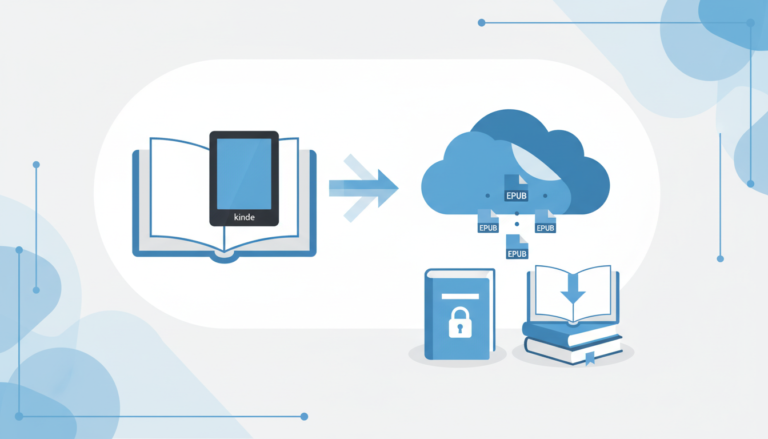
Your ARC readers utilize a wide variety of e-readers and tablets. Reduce reading friction by offering your manuscript in multiple, universally accepted formats. Always provide a cleanly formatted EPUB—the modern industry standard for Apple Books, Google Play, and all current Kindles. Include a PDF for readers who prefer desktop reading or require a fixed layout. Finally, while Amazon has officially retired the MOBI format, offering it can still accommodate readers clinging to legacy Kindle devices.
Troubleshooting Device Upload Issues for Readers
Technical hiccups delay reading times and ultimately cost you launch-day reviews. Instead of acting as a personal IT helpdesk, let your distribution platform do the heavy lifting. BookFunnel, for example, offers exceptional dedicated tech support to guide readers through side-loading files onto their specific devices. To further streamline the process, provide your team with a simple, step-by-step FAQ detailing how to use Amazon’s “Send to Kindle” feature, proactively resolving the most common upload errors before they happen.
The Launch Phase: Turning ARC Readers into Reviewers
Getting your book into the hands of readers is only half the battle. The true ROI of your Advance Reader Copy team lies in successfully converting those early readers into launch-week reviewers. Executing a seamless review strategy requires tact, precise timing, and community engagement.
Timing Your Review Reminders
Strategic communication is the key to high conversion rates. You want to stay top-of-mind without becoming a nuisance in their inbox. Send a pre-launch heads-up one week before publication, advising readers to finish reading and draft their reviews in a separate document.
On launch day, send your official review request email. Keep it short, celebratory, and action-oriented, featuring a direct, mobile-friendly link to your Amazon product page. Finally, schedule a polite nudge 3 to 5 days post-launch for those who haven’t posted yet.
Encouraging Verified Purchase Reviews Legally
Amazon’s algorithm heavily favors Verified Purchase reviews. While you cannot mandate purchases, offer gift cards, or compensate readers for buying your book (this strictly violates Amazon’s Terms of Service), you can utilize launch discounts.
Temporarily drop your Kindle eBook price to $0.99 or run a Free Promotion via KDP Select. Politely notify your ARC team of the discount, explaining that if they choose to download the live version before pasting their review, it will carry the coveted Verified Purchase badge. Be sure to remind them that reading the live version through Kindle Unlimited (KU) also generates a verified review!
Handling Late or Missing Reviews
Even the most vetted ARC teams experience attrition. A healthy, well-managed team will yield a 50% to 70% review rate—expecting 100% participation is unrealistic. Track review completions using a simple Google Sheet.
For late reviewers, send a final, grace-filled reminder one week post-launch. Acknowledge that life gets busy and offer an extended, low-pressure deadline. If a reader consistently fails to leave reviews across two consecutive book launches, quietly prune them from your active roster. Focus your energy on nurturing reliable reviewers rather than chasing unengaged ones.
Creating a Sense of Community During Launch Week
Engagement drives action. Transforming a static email list into an active community can significantly boost your review rates. Treat your ARC team like VIP insiders rather than just a marketing asset.
Host a private Facebook group or Discord server to foster interaction. During launch week, share screenshot updates of your Amazon rankings, post behind-the-scenes character art, and celebrate sales milestones together. When readers feel emotionally invested in your KDP journey and connected to you as an author, their motivation to leave a thoughtful, prompt review skyrockets.
Scaling and Maintaining Your ARC Team Long-Term
Building a high-converting ARC team is only half the battle; maintaining a responsive, engaged roster as your KDP catalog grows requires continuous optimization. A stagnant list yields diminishing returns, so treating your team like a living community is essential for sustained launch success.
Pruning Non-Responsive Members
When it comes to ARC teams, quality always trumps quantity. Having 500 readers who download your file but never leave a review will only damage your email deliverability and inflate your distribution costs. Implement a strict two-strike rule: if a reader claims two consecutive books but fails to review them (or communicate why), politely remove them from your active roster. Routine pruning ensures your review-to-download ratio remains exceptionally high and your energy is spent on dedicated readers.
Incentivizing Reviews Without Breaking Amazon TOS
Amazon’s Terms of Service strictly prohibit offering direct compensation, gift cards, or guaranteed gifts in exchange for a review. However, you can still reward your community organically. Offer TOS-compliant incentives to your broader list, such as:
- Exclusive, unpublished bonus epilogues or prequel novellas.
- The opportunity to have a minor character named after them in an upcoming series.
- Behind-the-scenes access to character art and early cover reveals.
The goal is to provide intrinsic, fan-focused value that makes them want to support you, rather than transactional compensation.
Building a VIP Street Team
As you scale, you will naturally identify a small percentage of super-fans who consistently leave thoughtful reviews on day one. Segment these top-tier readers into an exclusive VIP Street Team. While standard ARC readers simply read and review, a Street Team actively helps with marketing—sharing teasers on TikTok, dropping recommendations in reader groups, and hyping your launch. Reward these VIPs with physical swag, signed paperbacks, or lifetime ARC status to cultivate fierce loyalty.
Utilizing Discord or Facebook Groups for Engagement
To transition your list from silent readers to an active fanbase, move them into a centralized social hub. Facebook Groups remain highly effective for broad, accessible community building, while Discord is excellent for creating highly organized, interactive channels (e.g., dedicated spoiler chats, launch-day hype rooms). Fostering peer-to-peer connection among your readers keeps your author brand top-of-mind between your KDP launches.
Navigating Amazon’s Terms of Service and FTC Guidelines
Protecting your KDP publishing account is just as important as generating launch momentum. Both Amazon and the Federal Trade Commission (FTC) have strict guidelines regarding Advance Reader Copies (ARCs). Mishandling these rules can lead to wiped reviews or a permanently banned account.
The Mandatory Disclosure Statement
By law, the FTC requires reviewers to publicly disclose any material connection to a brand or author. For ARC teams, this means readers must state that they received a free copy. Train your team to include a simple disclaimer in their feedback, such as: “I received a free copy of this book and am voluntarily leaving an honest review.” Make this a non-negotiable requirement during your onboarding process.
Avoiding Review Manipulation Red Flags
Amazon’s algorithm is hyper-sensitive to review manipulation. To keep your account safe, never ask friends, family, or people sharing your IP address to leave reviews, as Amazon tracks digital footprints. Additionally, avoid blasting your entire ARC team to review on the exact same day. A sudden, unnatural spike of hundreds of reviews within hours can trigger Amazon’s bots. Instead, encourage a steady, organic drip of reviews throughout your launch week.
Why You Should Never Offer Incentives for Positive Reviews
Amazon’s Terms of Service strictly prohibit compensating readers for reviews. You cannot offer gift cards, cash, bonus epilogues, or merchandise in exchange for a review. More importantly, never demand a positive rating. The only acceptable exchange is a free book for an honest review. Dictating star ratings is a fast track to account suspension.
Staying Safe During KDP Category Updates
When Amazon updates KDP categories, their algorithm heavily scrutinizes books in high-volatility niches. Ensure your book is placed only in highly relevant categories. Do not instruct ARC readers to artificially stuff specific keywords into their reviews to manipulate organic rankings during these shifts. Amazon penalizes coordinated keyword manipulation. Keep your metadata accurate and let your readers’ honest, organic feedback drive your conversions.